What hail actually does
Hail rarely puts a hole straight through a roof. It bruises: the impact crushes the material and breaks its protective surface, and the roof then fails from those points over the following months and years as UV, water and freeze-thaw work on them. That is why a roof can look fine after a storm and start leaking the next spring — and why the inspection needs to happen while the damage is still traceable to the storm date.
Signs of hail damage
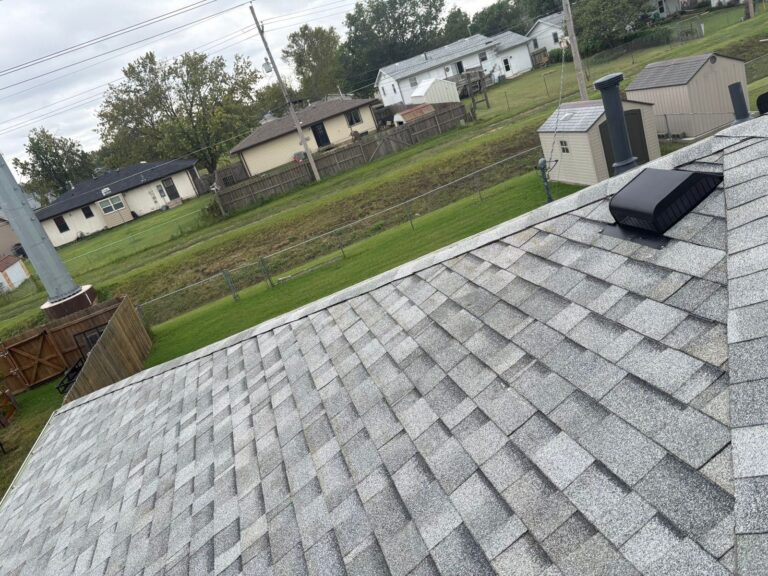
- Dents in soft metal: gutters, downspouts, edge metal, HVAC fins and vent caps
- Granules collecting in gutters, or shiny spots where granules are gone
- Circular bruises on membrane that feel soft when pressed
- Fractured surfacing or exposed asphalt on mod-bit and built-up roofs
- Split pipe boots, damaged skylight domes and cracked sealant
- New leaks weeks or months after a storm
Soft-metal denting is the tell adjusters look for first: if the gutters and vent caps took hail, the roof did too.
Should you file a claim?
Get the roof inspected and documented first, then decide with real information: the extent of damage, the likely scope, and your deductible. We will tell you when damage is cosmetic or below the threshold where a claim makes sense. What we will not do is tell you a roof is destroyed when it is not — if a storm chaser knocked on your door and promised a free roof, that is the sales pitch to be careful with.
How the claim itself works, including ACV vs. RCV and adjuster meetings: roof insurance claims.
Frequently asked questions
How big does hail have to be to damage a roof?
One inch is the common rule of thumb for asphalt shingles, but wind-driven hail below that size damages aging or brittle materials, and two-inch stones — which the Kansas City metro sees most years — damage almost any system.
How long after a storm can I file?
Policies set their own deadlines from the date of loss, and carriers get stricter the longer you wait. Report promptly, even if you are still deciding whether to pursue the claim.
Can hail damage be repaired instead of replaced?
Sometimes. Isolated damage is repairable; damage spread across the roof usually is not, because the bruised areas fail on their own schedule. The inspection decides it, not a rule of thumb.
What is the most hail-resistant roof?
For homes in hail country, rubber systems such as Euroshield and heavy-gauge metal outperform standard asphalt by a wide margin. For commercial roofs, thicker membrane over a rigid cover board is the practical upgrade.
Storm response in: Kansas City · Topeka & NE Kansas · Metro Atlanta