When a coating is the right call
Coatings restore roofs; they do not resurrect them. The candidate is a roof whose membrane is intact and whose insulation is dry, but whose surface is weathered, chalky, or leaking at the details. Core cuts come first: if the insulation is wet, a coating seals the water in and you have paid to make the problem invisible.
| Good candidate | Not a candidate |
|---|---|
| Membrane sound, surface weathered | Wet or crushed insulation below the membrane |
| Leaks confined to seams and flashings | Widespread splits, or damage over 25–30% of the roof |
| Drainage works or can be corrected | Deck damage or structural sag |
| Owner wants to defer a capital project | Roof is past service life and failing in the field |
Silicone or acrylic?
| Silicone | Acrylic | |
|---|---|---|
| Relative cost | Higher | Lower |
| Service life | 20+ years | 15 – 20 years |
| Ponding water | Handles it without breaking down | Degrades under standing water |
| Reflectivity | Holds up over time | Starts at 85–90%, settles to 75–80% |
| Best for | Roofs that pond, humid Atlanta summers | Well-drained roofs, tighter budgets |
On a roof that holds water — common on older low-slope buildings in both our markets — silicone is usually worth the premium. On a roof that drains properly, acrylic does the job for less.
What it saves
A full restoration system runs about $6 to $11 per square foot installed, and $5 to $5.50 per square foot on metal roofs — meaningfully less than the $9 to $20 a tear-off and new system costs, with no dumpsters and no interruption inside the building. It adds 10 to 20 years of service life, and many restoration systems carry manufacturer warranties comparable to new roofing. Full pricing is on the costs page.
How we install it
- Inspection and core cuts to confirm the insulation is dry and the membrane is sound.
- Adhesion testing on the actual substrate — coatings behave differently over TPO, EPDM, mod-bit and metal.
- Cleaning and prep. Power wash, remove debris, repair seams and flashings, prime where required.
- Detail work first. Reinforcing fabric at seams, penetrations and transitions, which is where restorations succeed or fail.
- Field application to spec within the manufacturer’s temperature and humidity window, with wet-mil thickness checked as we go.
- Final inspection and warranty registration, plus a maintenance schedule.
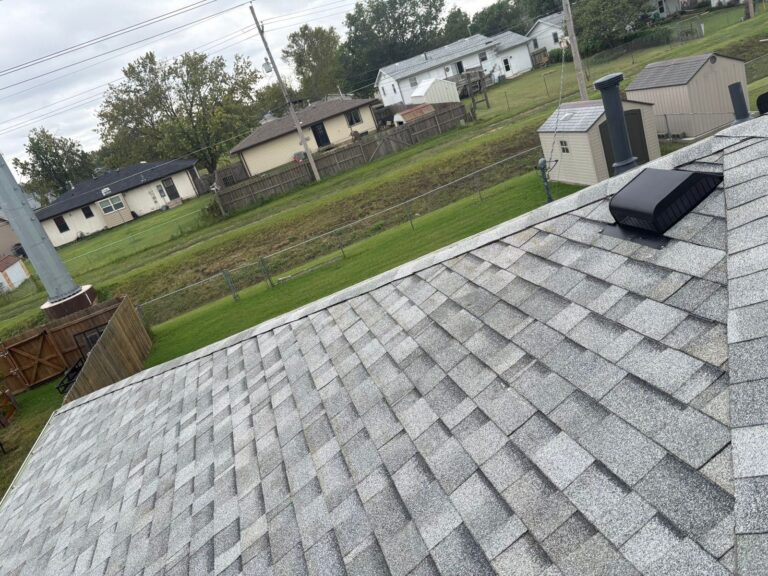
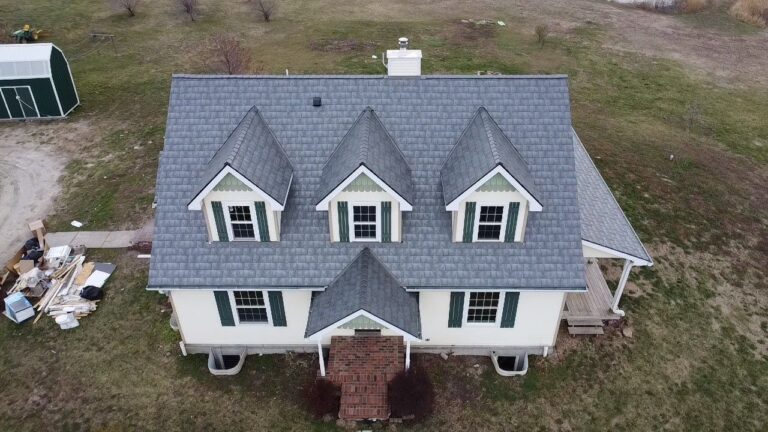
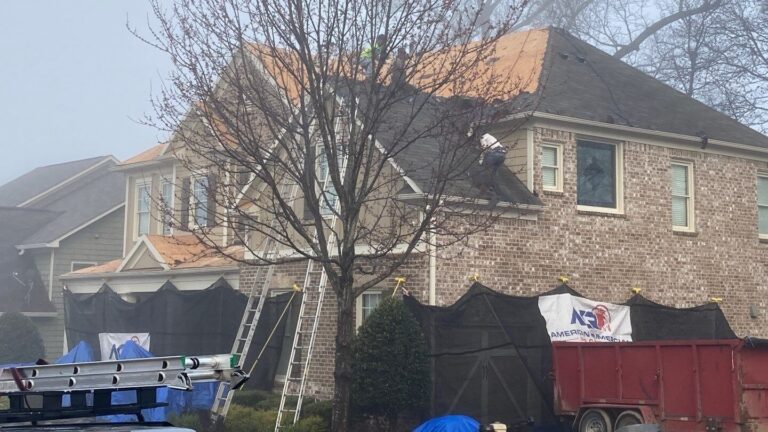
Coating & restoration projects
Frequently asked questions
Can any roof be coated?
No. The membrane has to be sound and the insulation dry. We core-cut before quoting, and if the roof is not a candidate we will tell you and price a replacement instead.
Does a coating stop an active leak?
Not by itself. Leaks are repaired and wet material removed first; the coating is what protects the repaired roof going forward.
Will it lower our cooling costs?
Usually. A bright reflective coating drops peak roof temperature substantially, which shows up on summer cooling bills — most noticeably on single-story buildings with large roofs.
Can a coated roof be re-coated later?
Yes. That is much of the appeal: at the end of the coating’s life the roof is cleaned and re-coated at a fraction of replacement cost, rather than torn off.
Roof coatings in: Kansas City · Topeka & NE Kansas · Metro Atlanta