
American Commercial Roofing | Serving Kansas & Beyond | April 2026
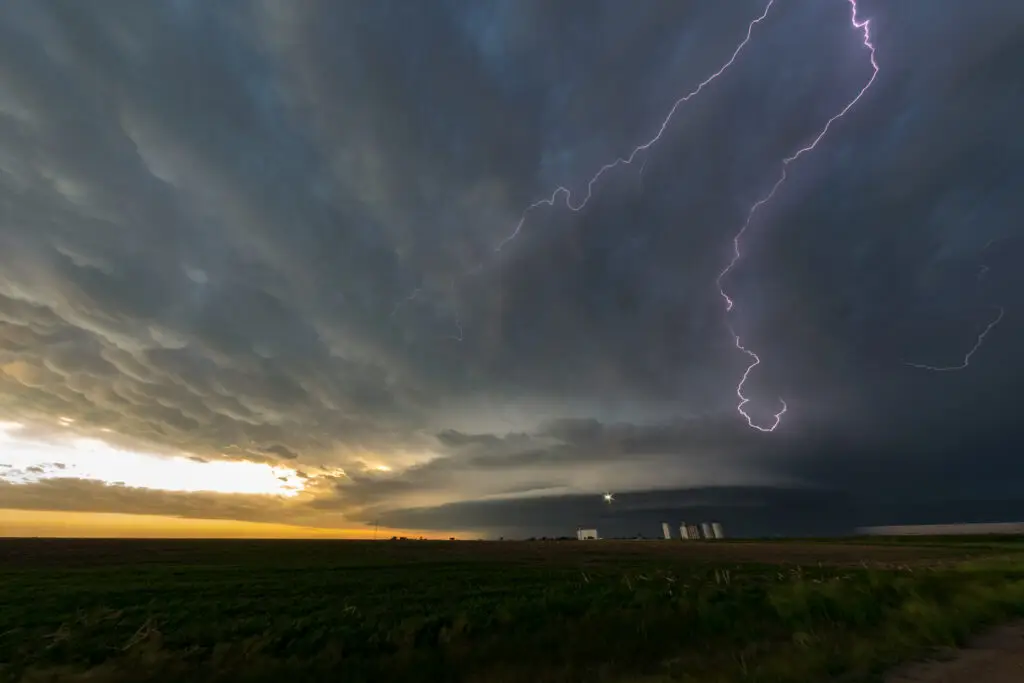
The recent tornado outbreak across eastern Kansas on April 13 left communities reeling. With confirmed EF-2 tornadoes tearing through Ottawa and Hillsdale, and additional twisters reported near Spring Hill, Pomona, Quenemo, and Blue Mound, over 113 structures were affected — and many homeowners are now facing roof damage they may not even be fully aware of yet.
If your home is anywhere in the path of these storms, the steps you take in the next few days and weeks matter. Acting quickly and methodically can protect your family, preserve your property, and make the insurance process far less painful. Here’s exactly what to do.
1. Make Sure Everyone Is Safe First
Before you even think about your roof, make sure everyone in your household is accounted for and uninjured. If you smell gas, see downed power lines, or notice structural damage to your walls or foundation, stay out of the home and call 911. Kansas emergency services have been responding across Franklin, Miami, and Linn counties, and they should be your first call if there’s any immediate danger.
Once you’ve confirmed it’s safe to be in and around your home, you can start assessing the situation — but stay off the roof itself. Walking on a storm-damaged roof is dangerous, even if it looks intact from the ground. Leave that to the professionals.
2. Document Everything You Can See
Grab your phone and start taking photos and videos. This documentation is going to be critical for your insurance claim, and the more thorough you are now, the smoother that process will go later.
Here’s what to photograph:
- The roof from ground level — Look for missing shingles, exposed underlayment, debris on the roof, or sections that look dented, lifted, or out of place.
- Gutters and downspouts — Check for dents from hail, detachment from the fascia, or accumulation of roofing granules (those small, sand-like particles that wash off damaged shingles).
- Interior ceilings and walls — Water stains, bubbling paint, damp spots, or dripping water all point to roof damage above.
- Your yard and property — Fallen branches, scattered debris, damaged fencing, and siding damage help tell the full story of what your home went through.
Take wide shots and close-ups. Date-stamp everything. If you have before photos of your home, keep those handy too — they make it much easier to show your insurer what changed.
3. Prevent Further Damage — But Don’t Overdo It
Kansas weather doesn’t wait for you to finish repairs. If your roof has visible holes, missing shingles, or exposed areas, temporary measures can prevent water from causing additional interior damage during the next rain.
A tarp secured over the damaged area is the most common short-term fix. If you can do this safely from the edge of the roof or from a ladder — great. If not, many roofing contractors, including our team at American Commercial Roofing, offer emergency tarping services to protect your home while you wait for a full inspection and repair.
Keep your receipts for any materials you purchase for temporary repairs. Most homeowner’s insurance policies cover reasonable costs to prevent further damage, and those receipts become part of your claim.
4. Contact Your Insurance Company
Call your homeowner’s insurance provider as soon as possible to report the damage and open a claim. After a widespread event like the April 13 storms, insurance adjusters get flooded with claims across the region, and the earlier you get in line, the sooner yours gets processed.
When you call, have the following ready:
- Your policy number
- The date the damage occurred (April 13, 2026, for this storm event)
- A general description of the damage you’ve observed
- Your photos and video documentation
Your insurer will assign an adjuster to inspect the damage. Here’s an important tip: you have the right to get your own professional roof inspection before or alongside the insurance adjuster’s visit. An independent inspection from a qualified roofing contractor ensures nothing gets missed — and gives you a detailed report you can reference if there’s a disagreement about the scope of damage.
5. Schedule a Professional Roof Inspection
This is the single most important step you can take. Storm damage to a roof isn’t always obvious. High winds can loosen shingles without tearing them off. Hail can fracture the protective granule layer on asphalt shingles, creating weak spots that lead to leaks months later. Tornado-driven debris can cause impact damage that’s invisible from the ground but serious enough to shorten your roof’s lifespan by years.
A professional roof inspection covers everything a trained eye needs to see: the shingles or membrane, the flashing around vents and chimneys, the decking underneath, the gutters, and the overall structural integrity of the system. At American Commercial Roofing, our inspectors document every finding with photos and provide you with a detailed written report — the kind of report that holds up when you’re working with your insurance company.
If your home is in Ottawa, Hillsdale, Spring Hill, Pomona, or anywhere else in the affected area, don’t wait to find out the hard way that your roof took more damage than it looks like. A free inspection now can save you thousands in surprise repairs later.
Schedule your free storm damage inspection today. Call us at (800) 674-9535 or request an inspection online. We’re already working with homeowners across eastern Kansas and can get to you quickly.
6. Be Cautious About Storm Chasers
After every major storm, out-of-town contractors flood into the affected area offering cheap, fast repairs. Some of them are legitimate. Many are not. These “storm chasers” often knock on doors within hours of a tornado, offer rock-bottom prices, do substandard work, and disappear before the next storm reveals how poor the job really was.
Here’s how to protect yourself:
- Verify licensing and insurance. Any contractor working on your home should carry general liability insurance and workers’ compensation coverage. Ask for proof.
- Check for a local presence. A company with a physical office, local phone number, and established reputation is far less likely to cut corners than one operating out of a truck from three states away.
- Never pay the full amount upfront. A reputable roofing contractor will never ask for 100% of the cost before work begins. A reasonable deposit with the balance due upon completion is standard practice.
- Get everything in writing. The scope of work, materials, timeline, warranty terms, and total cost should all be spelled out in a written contract before any work begins.
American Commercial Roofing is locally based in St. Marys, Kansas. We’ve been serving Kansas communities for years, and we’ll still be here long after the storm chasers have moved on to the next disaster.
7. Understand Your Repair Timeline
After a storm of this magnitude, roofing materials and qualified labor are in high demand across the region. It’s realistic to expect some wait time before permanent repairs can begin — especially if your insurer needs to complete their inspection first.
A typical post-storm timeline looks something like this:
- Days 1–3: Emergency tarping and temporary protection
- Week 1–2: Professional inspection and damage documentation
- Week 2–4: Insurance adjuster visit and claim processing
- Week 3–6: Repair scheduling and material ordering
- Week 4–8: Permanent repairs or replacement completed
The sooner you start this process, the sooner you land a spot in the repair queue. Homeowners who wait weeks to schedule an inspection often find themselves waiting months for repairs — and that delay can mean additional water damage, mold growth, and escalating costs.
Don’t Wait — Your Roof Won’t Fix Itself
The April 13 storms were a serious event. With EF-2 tornadoes confirmed and wind speeds reaching 125 mph, even homes that look fine from the street may have sustained real damage. The worst thing you can do right now is assume your roof is fine without having a professional confirm it.
At American Commercial Roofing, we’re offering free storm damage inspections for homeowners across eastern Kansas. Our team will assess your roof, document what we find, and give you a clear, honest picture of where things stand — no pressure and no obligation.
Get Your Free Storm Damage Inspection
Serving Ottawa, Hillsdale, Spring Hill, Pomona, and all of eastern Kansas.
Don’t wait until a small problem becomes a big one.